
"Roman coffee culture"
100 article(s) found

Let you taste the Greco-Roman coffee, Italian coffee, Greco-Roman coffee.
Italian coffee culture has a long history. Whether it is a warm afternoon or a rainy morning, Italians can always take a stroll and then have a cup of Apenning coffee. A group of people can be seen sitting idle all the time in bars and coffee bars in Italian cities. It can be said that coffee is a national necessity in Italy. No wonder some people say that Italians are the world.

Coffee making skills Roman feelings of Greco-Roman coffee
Italian coffee culture has a long history. Whether it is a warm afternoon or a rainy morning, Italians can always take a stroll and then have a cup of Apenning coffee. A group of people can be seen sitting idle all the time in bars and coffee bars in Italian cities. It can be said that coffee is a national necessity in Italy. No wonder some people say that Italians are the world.

Greco-Roman coffee that makes you taste Roman feelings.
Italian coffee culture has a long history. Whether it is a warm afternoon or a rainy morning, Italians can always take a stroll and then have a cup of Apenning coffee. A group of people can be seen sitting idle all the time in bars and coffee bars in Italian cities. It can be said that coffee is a national necessity in Italy. No wonder some people say that Italians are the world.

Greco-Roman coffee with common sense and Roman feelings
Italian coffee culture has a long history. Whether it is a warm afternoon or a rainy morning, Italians can always take a stroll and then have a cup of Apenning coffee. A group of people can be seen sitting idle all the time in bars and coffee bars in Italian cities. It can be said that coffee is a national necessity in Italy. No wonder some people say that Italians are the world.
Greco-Roman coffee that makes you taste Roman feelings.
Italian coffee culture has a long history. Whether it is a warm afternoon or a rainy morning, Italians can always take a stroll and then have a cup of Apenning coffee. A group of people can be seen sitting idle all the time in bars and coffee bars in Italian cities. It can be said that coffee is a national necessity in Italy. No wonder some people say that Italians are the world.

Greco-Roman coffee with Roman feelings
Italy is often full of high-end friends. At that time, the names of Goethe, Mark Twain, Hans Christian Andersen and others were recorded in the guest book of the cafe. In particular, the painter Kirico often sat in the same seat in the cafe and drank the same drink. Coffeegreco was recognized as an important cultural heritage in 1953, and now many tourists and people from other places often come here to look for historical figures.

Greco-Roman coffee that makes you taste Roman feelings.
Italy is often full of high-end friends. At that time, the names of Goethe, Mark Twain, Hans Christian Andersen and others were recorded in the guest book of the cafe. In particular, the painter Kirico often sat in the same seat in the cafe and drank the same drink. Coffeegreco was recognized as an important cultural heritage in 1953, and now many tourists and people from other places often come here to look for historical figures.

Coffee culture: the source of coffee temperament: equality and fraternity
There is no doubt that the greatest event of mankind in the first century was the birth of Christianity in the Jerusalem area of Canaan. After more than two hundred years of baptism, this product of longing for a savior in the subjugation of the Jews ushered in the Milan edict issued by the Roman emperor Constantine, recognizing the legal freedom of Christianity, and then granted the church a series of privileges. Before he died, he was willing to take off his yellow robe and put on white.

Costa Rica Tara Pearl San Roman washed fine coffee beans origin development history and culture introduction
Coffee cultivation in Costa Rica was introduced from Cuba in 1779 and exported for the first time only in 1820. There are about 32,000 coffee farmers in Costa Rica, with an average planting area of less than one hectare (10,000㎡) per farmer. Costa Rica has a population of 4.1 million (2006) and coffee cultivation area of 82,500 km.

The history, culture and story allusions of the holy boutique beans of the Saint Roman Manor in Costa Rica.
For the exchange of professional baristas, please pay attention to the coffee workshop (Wechat official account cafe_style). The history, culture, stories and allusions of the Saint Roman Manor in Costa Rica the output of Costa Rica is small, with an annual output of about 110000 tons, ranking seventh in Central and South America. Costa Rica is dominated by recent coffee varieties, such as Kaddura, Kaduai, New World, etc., ancient bourbon and iron

Description of Coffee Variety Culture and Fine Coffee Bean Taste in Saint Roman Manor, Costa Rica
Costa Rica has a variety of cultures, which is the cultural confluence of Central and South America. When the Spaniards conquered America in the 16th century, the northern part of Costa Rica was the southernmost territory of the Mayan civilization, the central and southern regions were Chibucha territories, and the west coast was inhabited by black slaves from Africa from the 17th to 18th centuries. at this time, many Chinese

Introduction to the Flavor and Taste characteristics of Coffee Bean in Saint Roman Coffee Manor, Costa Rica
Costa Rica has a total population of 4.667 million (2013), mainly concentrated in cities such as San Jose, Alajuela and de Sampalado. Whites and Indo-Europeans account for 95%, blacks account for 3%, Indian natives account for about 0.5%, other ethnic groups account for 1.5%, and Chinese account for about 50,000, mainly in San Jose, Guanacaster, Punta Renas, Limon and other provinces. The capital San Jose

A brief introduction to the Origin, Development, History and Culture of Fine Coffee beans in St. Roman Manor
All the coffee trees planted in Costa Rica are Arabica coffee trees. through improvement, the quality of coffee beans is better and more stable. in order to facilitate picking, coffee trees are kept at a height of about 2 meters through continuous pruning. The coffee that people eat is the taste of the seeds in the fruit that are brewed in water. After picking raw coffee beans, the peel, pulp, seed film and sun exposure must be removed.
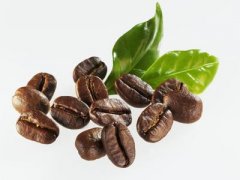
A brief introduction to the Origin, Development, History and Culture of Fine Coffee beans in St. Roman Manor
The research center, located about 30 kilometers northeast of the Costa Rican capital San Jose, belongs to the Costa Rican Coffee Association and is a research institution for villa sarchi planting, breeding and quality inspection newly developed by Costa Rica's national coffee breeds. in addition, it also has 10 hectares of experimental plots, planting a number of excellent varieties. Coffee is the main agricultural product in Costa Rica, with an annual output of more than 2 million bags

A brief introduction to the origin, development, history and culture of St. Roman's boutique coffee beans with the fragrant smell of grass.
Excellent Costa Rican coffee is called extra hard beans, and this kind of coffee can grow at an altitude of more than 1500 meters. Altitude has always been a problem for coffee growers. The higher the altitude, the better the coffee beans, not only because the higher altitude can increase the acidity of the coffee beans and thus increase the flavor, but also because the night temperature at the higher altitude is lower, which can make the trees grow slowly.

A brief introduction to the History and Culture of the Origin and Development of Fine Coffee beans in St. Roman Manor
All the coffee trees planted in Costa Rica are Arabica coffee trees. through improvement, the quality of coffee beans is better and more stable. in order to facilitate picking, coffee trees are kept at a height of about 2 meters through continuous pruning. The coffee that people eat is the taste of the seeds in the fruit that are brewed in water. After picking raw coffee beans, the peel, pulp, seed film and sun exposure must be removed.
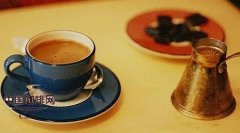
Brazilian coffee Rio de Janeiro coffee and Greco-Roman coffee
Rio de Janeiro Coffee Cafe Carioca (Brazil) deeply cultivated Coffee 100cc Sugar 15g Rum 15cc Orange (cut) 1Compact 4 cups of whipped cream 20cc orange powder add sugar, rum and orange slices and pour in the coffee. Covered with whipped cream and sprinkled with orange powder (can also be replaced by shaved orange peel) Rio de Janeiro coffee is characterized by orange and cream.
Brazilian Rio de Janeiro coffee and Greco-Roman coffee
Rio de Janeiro Coffee Cafe Carioca (Brazil) deeply cultivated Coffee 100cc Sugar 15g Rum 15cc Orange (cut) 1Compact 4 cups of whipped cream 20cc orange powder add sugar, rum and orange slices and pour in the coffee. Covered with whipped cream and sprinkled with orange powder (can also be replaced by shaved orange peel) Rio de Janeiro coffee is characterized by orange and cream.
Fancy coffee to make Greco-Roman coffee
Caffe Greco Romana (Greece, Italy) deeply cultivated coffee powder 8g water 100cc orange peel a little lemon peel with a little orange peel jam use a special coffee pot to boil a special coffee pot containing coffee powder, water, orange peel and lemon peel. Immediately remove the coffee pot from the fire when it is boiled, leave it for about 1 minute, then pour it into the cup and pour over the orange peel jam.